
Methods Article
Hybrid Aeroponic Propagation of Tissue Culture-Derived Soft-Stem Micro-Cuttings of Piper methysticum
A three-trial protocol evaluation with air-pruning-mediated root architecture conditioning in tissue-cultured Kali-Hiwa
- 1 American Kava Association, Sacramento, California, USA
- 2 American Kava Association, Boca Raton, Florida, USA
- 3 Kavafied, Tampa, Florida, USA
Correspondence: Tyler Blythe, admin@americankavaassociation.org · ORCID: Tyler Blythe 0009-0006-7884-0650; Jeffrey Bowman 0009-0004-1269-6559
- DOI
- Pending Crossref registration
- Preprint
- 10.5281/zenodo.22839796 · AKA Technical White Paper No. 8
- Received
- 19 September 2026
- Accepted
- 28 October 2026
- Published
- 28 October 2026
- Volume
- Volume 2 (2026)
- Article
- 008
- Article type
- Methods Article
- Review
- Computational Manuscript Review (CMR) · Editorially accepted
- Handling editor
- Tyler Blythe, Editor-in-Chief (also an author)
- License
- CC BY 4.0 · © 2026 The Author(s)
Abstract
Kava (Piper methysticum G. Forst.) is an obligate clonally propagated crop whose planting material supply is constrained by its dependence on woody nodal cuttings taken at harvest, a practice that reportedly yields 49–60% rooting over 6–8 weeks. We describe and evaluate a hybrid propagation protocol that combines soft-stem micro-cuttings excised from acclimatized Stage IV tissue-cultured plantlets with a modified aeroponic mist chamber, and that incorporates a defined air-pruning and lateral-branching conditioning sequence. Three independent first-generation propagation runs of 96 cuttings each were executed approximately four months apart (August 2025, December 2025, April 2026) using a single modified TurboKlone T48 unit fitted with double collars and a combined ultrasonic fogger–sprinkler delivery system. Across the three runs (288 cuttings), 277 (96.2%; 95% CI 93.3–97.9) rooted within 20 days and 266 (92.4%; 95% CI 88.7–94.9) met a pre-specified well-rooted threshold of ≥20 roots each ≥2 cm with visible branching, at a pooled mean of 46.2 ± 17.2 primary roots per well-rooted plant. Run-to-run variation in rooting success was negligible (95.8%, 95.8%, 96.9%; Fisher–Freeman–Halton exact p > 0.99). Following a 48-h pulsed fogger–sprinkler phase applied at Day 20 and an 8-d continuous-irrigation phase, every rooted plant exhibited arrest of primary root elongation with localized apical browning and subsequent lateral branching (277/277), producing a pooled mean of 34.2 ± 11.4 new lateral roots per well-rooted plant at a mean length of 1.84 ± 0.62 cm. Second-generation micro-cuttings harvested from first-generation propagules at Day 60 rooted at 95.1% (274/288; 95% CI 92.0–97.1), statistically indistinguishable from first-generation performance (difference 1.0 percentage points, 95% CI −2.3 to 4.4; Fisher's exact p = 0.68), supporting a repeating 60-day propagation cycle. Because the protocol was evaluated without a concurrent control arm and all cuttings within a run shared a single reservoir, the study establishes protocol feasibility and repeatability rather than the causal efficacy or relative superiority of any individual component; controlled comparisons are identified as the necessary next step.
Keywords: Piper methysticum; kava; aeroponics; soft-stem cutting; micropropagation; air pruning; root system architecture; adventitious rooting; clonal propagation; controlled environment agriculture
1. Introduction
Kava (Piper methysticum G. Forst.) is a sterile, obligately clonal crop of central cultural, medicinal and economic importance across Oceania [1,2]. Because it does not set viable seed, every plant entering production must be generated vegetatively. The prevailing practice is to cut woody nodal segments from mature stems at harvest, a method reported to yield 49–60% establishment over 6–8 weeks with pronounced seasonal and positional variability [3]. Coupling propagule supply to the harvest cycle imposes three structural constraints: planting material is available only intermittently, multiplication rate is bounded by the standing biomass of mature plants, and every propagule taken represents saleable root material forgone. These constraints underlie the chronic planting-material shortages reported across Pacific producing nations and are now emerging in the expanding United States kava sector.
In vitro micropropagation offers a route around the harvest cycle, and regeneration systems for P. methysticum from nodal explants and meristems have been demonstrated [4,5]. Adoption has nevertheless remained marginal. The reported protocols require sterile facilities and trained personnel, and neither reports quantitative ex vitro acclimatization outcomes — the stage at which micropropagated material is most frequently lost, with mortality of 41% reported under conventional glasshouse hardening of date palm plantlets [7], and where plantlet quality at transfer varies widely [6]. In our own operations, field acclimatization of tissue-cultured kava plantlets has been the dominant cost driver, and it is the transition from Stage III/IV plantlet to established plant, rather than in vitro multiplication itself, that limits throughput.
We have previously evaluated two propagation routes that decouple propagule collection from harvest by using soft-stem material taken during routine canopy pruning. In greenhouse trials, soft-stem cuttings rooted at 47% in peat cubes over 21 days and 51% in a conventional aeroponic cloner over 14 days [8]. A subsequent trial in an outdoor container nursery in Boca Raton, Florida, applied auxin-treated, microbially inoculated sphagnum moss to unwounded nodes on standing containerized stock plants, and recorded 75.8% rooting at 21 days pooled across three seasonal replicates (91/120; 81.7% in Kali-ISA, 70.0% in Kali-Hiwa), with all rooted layers surviving to 30 days after potting [9]. Both approaches removed the harvest-cycle dependency, but the soft-stem systems returned only moderate rooting frequencies and, more importantly for downstream establishment, highly variable root system architecture; air layering rooted well without controlled-environment infrastructure, but is labor-intensive per propagule and yields only as many propagules as the standing plant carries suitable nodes.
The present study is the third in this series, and the first to combine tissue culture-derived starting material with a controlled aeroponic root zone. All three studies use the same four-category rooting scale so that outcomes remain comparable across systems. The two earlier studies are published as American Kava Association technical white papers [8,9]; both were internally reviewed and audited by the authors but neither has been externally peer reviewed, and they are cited here as the source of the prior figures rather than as independently validated results.
Two lines of horticultural practice suggest a way to address both limitations simultaneously. First, aeroponic root zones sustain oxygen availability at the root surface and permit precise, continuously renewed nutrient delivery [12], conditions associated with improved adventitious rooting in cuttings [10,11] and exploited at commercial scale in seed potato systems that pair tissue culture-derived material with aeroponic multiplication [13,14]. Recent work in the medicinal species kratom (Mitragyna speciosa) demonstrated consistent aeroponic cutting propagation under indoor control [15], and comparable results have been reported in Cannabis sativa [16]. Second, air pruning — the transient exposure of root apices to air, arresting apical elongation and shifting growth to lateral primordia — is used to engineer compact, fibrous root architecture in container nursery production, and has been reported to increase root tip number and total root length in bench-grafted apple [17]. The evidence is not uniform: in nursery-grown citrus, air-pruning containers produced thicker roots without a significant growth advantage over standard containers, while chemical (copper-coated) pruning drove the growth response [19], and in Acer rubrum the dominant effect came from mechanical root pruning rather than container type [18]. Root traits of this kind have been proposed as indicators of transplant establishment in micropropagated material, though the predictive relationship itself remains to be validated in field trials [6].
To our knowledge, the deliberate combination of these elements has not been reported for P. methysticum. A systematic search identified no primary peer-reviewed study of kava propagation, tissue culture or agronomy published in an indexed venue since 2008; the propagation literature for this species effectively ends with refs. [4,5].
The present study therefore describes a hybrid protocol and evaluates its repeatability. Soft-stem micro-cuttings are excised from acclimatized Stage IV tissue-cultured Kali-Hiwa plantlets and rooted in a modified aeroponic mist chamber employing combined ultrasonic fogger and low-pressure sprinkler delivery, after which a defined pulsed-irrigation sequence is applied to condition root architecture. Three independent runs spaced approximately four months apart, together with three matched second-generation runs, address the following objectives: (i) to quantify rooting frequency and primary root development of tissue culture-derived soft-stem micro-cuttings under the described system; (ii) to characterize root architecture following the air-pruning and lateral-branching sequence; (iii) to assess run-to-run repeatability across seasonal windows; and (iv) to determine whether rooting performance is retained when cuttings are harvested from first-generation propagules, as required by a self-sustaining cyclic platform.
We state at the outset what this design can and cannot support. The study is a single-arm protocol evaluation. It carries no concurrent control arm, and it does not isolate the contribution of any individual component of the protocol. Its claims are accordingly restricted to the feasibility, magnitude and repeatability of the outcomes obtained under the protocol as a whole (Section 4.2).
2. Materials and Methods
2.1. Study Design and Rationale
The study was designed as a single-arm, repeated-run protocol evaluation. Three first-generation propagation runs were executed approximately four months apart to span distinct seasonal windows: Run 1 initiated 4 August 2025, Run 2 initiated 1 December 2025, and Run 3 initiated 6 April 2026. Each run used a fresh cohort of 96 Stage IV Kali-Hiwa micro-cuttings drawn from the same acclimatized source population, and applied identical equipment, protocols, nutrient formulations and environmental targets. The aeroponic unit was fully disassembled, cleaned and sterilized between runs.
At Day 60 of each first-generation run, a matched second-generation run was initiated from micro-cuttings harvested from that run's own propagules, giving three second-generation runs (initiated October 2025, February 2026 and June 2026 respectively). Second-generation runs applied the same protocol in full.
No concurrent control treatment was included. The protocol was evaluated as an integrated system, and the comparators available are historical: published values for traditional nodal cuttings [3] and the authors' own prior soft-stem and air-layering trials [8,9]. The consequences of this design choice for inference are set out in Section 4.2.
2.2. Plant Material
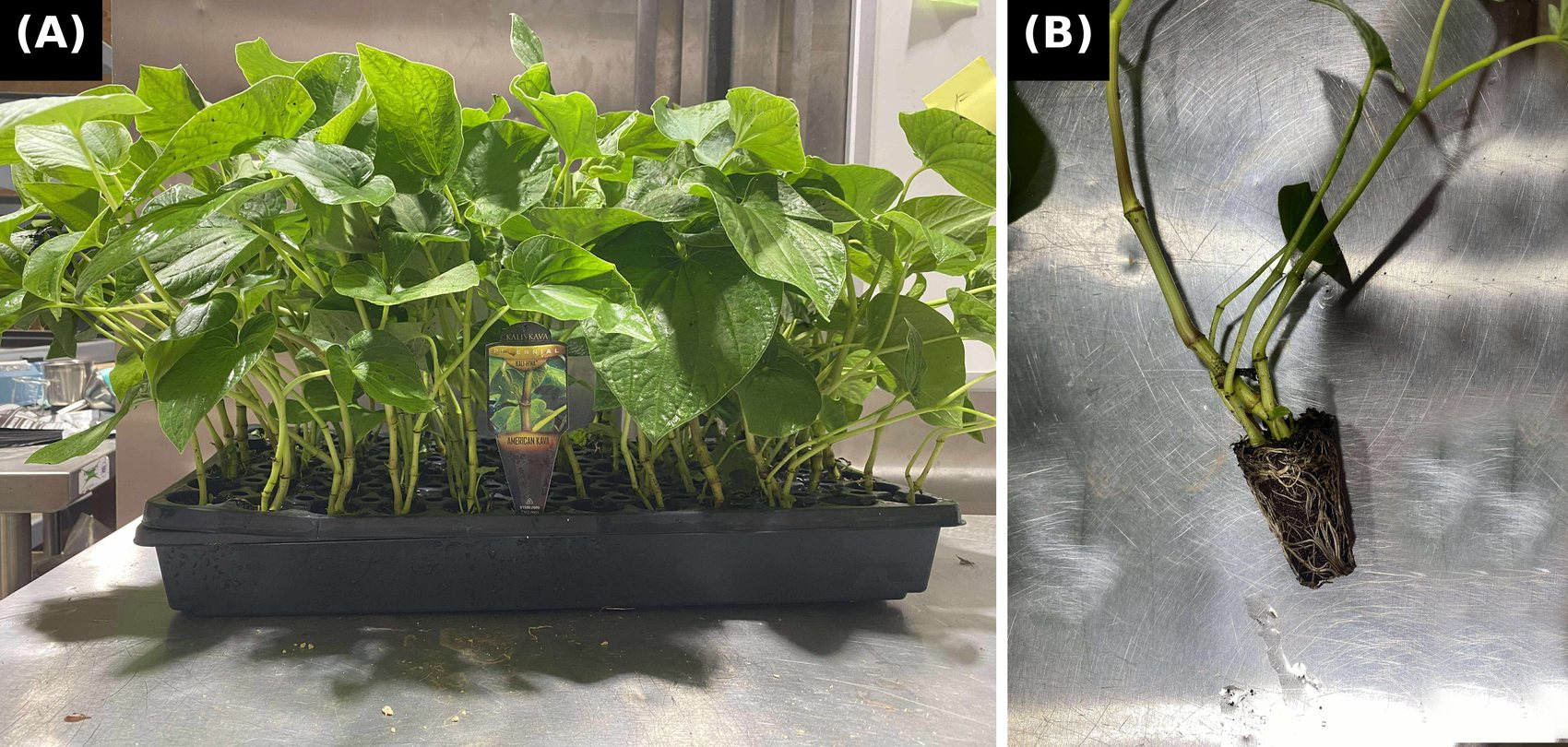
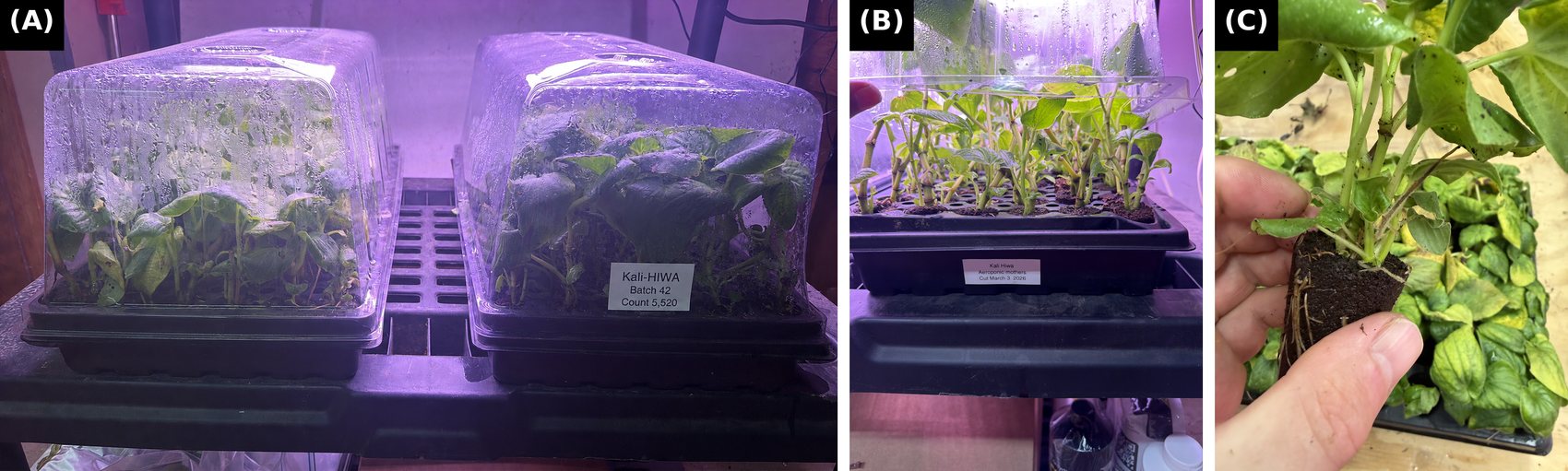
Tissue-cultured Kali-Hiwa plantlets were produced at the Kali Kava Research Facility, Sacramento, CA, USA. Stage IV plantlets were transferred from in vitro rooting medium to Root Riot peat cubes (Growth Technology, Taunton, UK) approximately four months prior to each run and hardened under greenhouse conditions. Consistent with cytokinin carryover from benzyladenine-supplemented Stage II multiplication medium [20,21], each hardened plantlet carried 3–5 vigorous axillary shoots at the time of cutting harvest, providing the shoot material from which micro-cuttings were excised. Stock plants at the stage of harvest are shown in Figure 3.
2.3. Micro-Cutting Preparation
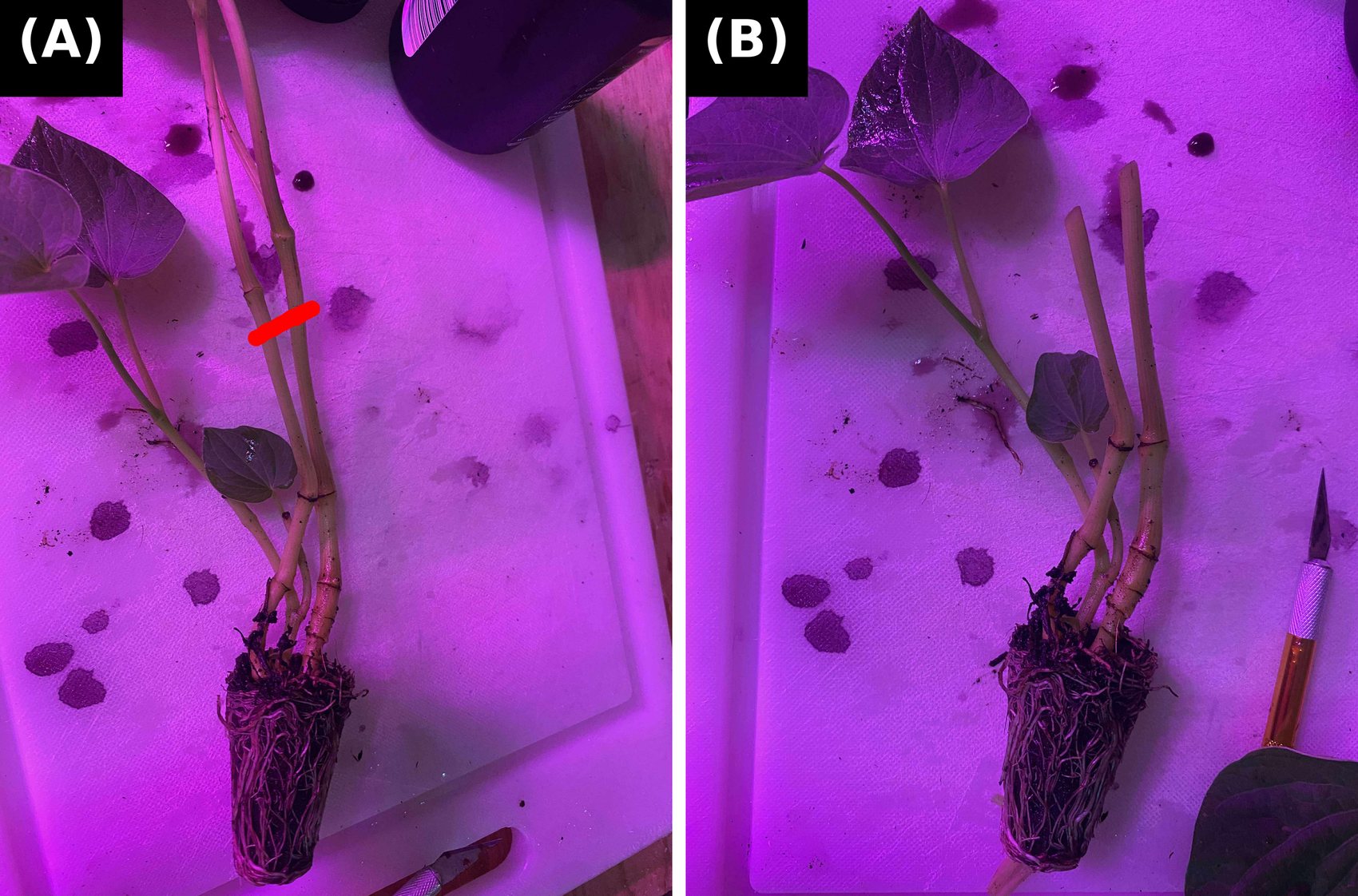
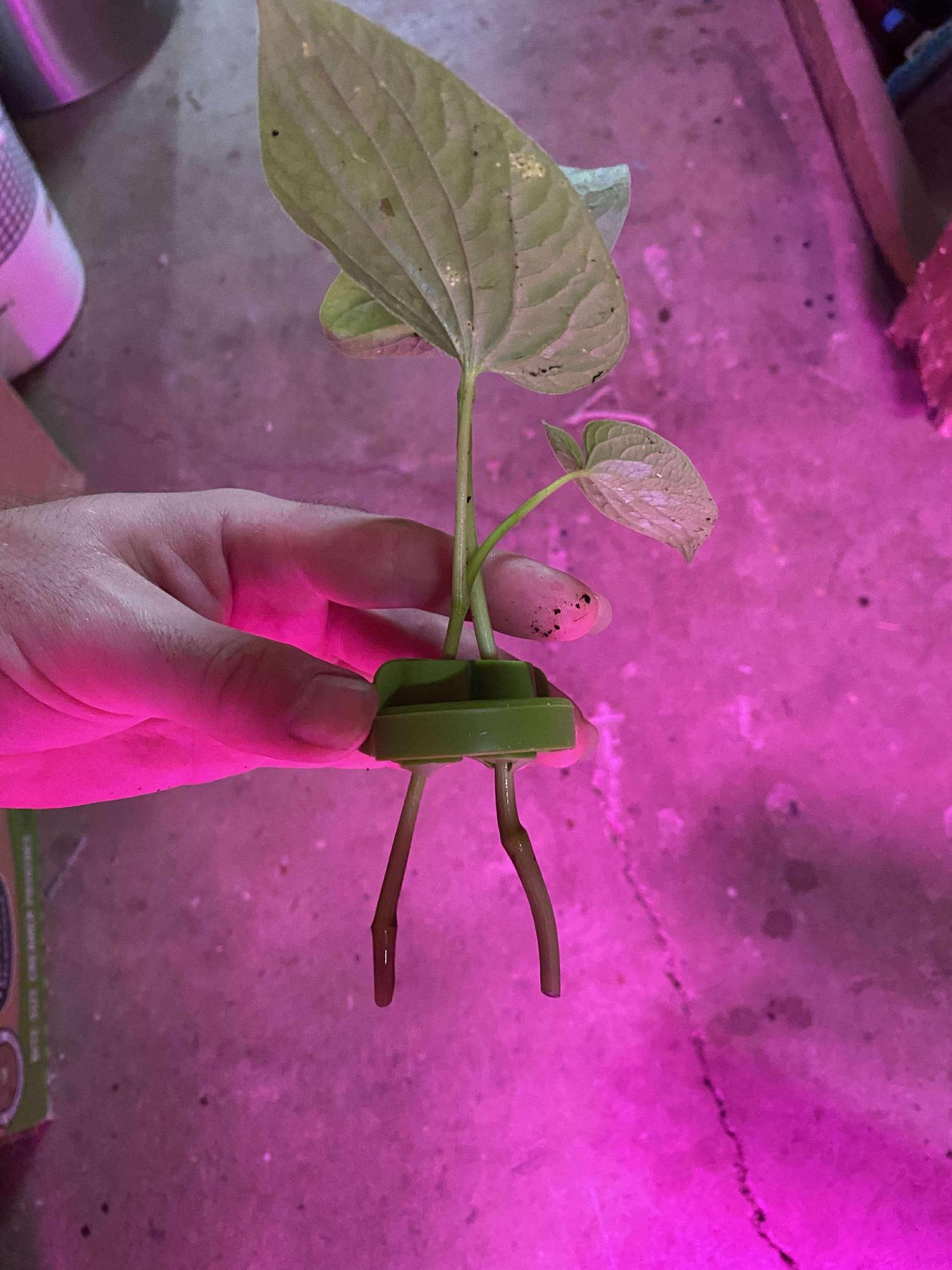
Soft-stem micro-cuttings were defined as herbaceous, pliable stem segments with minimal lignification that could be bent to approximately 90° without snapping. Material was selected on four criteria: stem diameter 2.0–4.0 mm measured with digital calipers (±0.1 mm) at the basal cut; non-senescing tissue at full turgor with dark-green coloration; position at the first to second node below the apical meristem; and retention of at least one leaf for photosynthesis. One to two micro-cuttings were excised per source plantlet using scalpels sterilized in 70% ethanol between cuts, cut at approximately 45° immediately below the node. Basal ends were dipped for 1 min in Clonex Rooting Gel (0.31% w/w indole-3-butyric acid; Growth Technology) and inserted into the system without an intervening drying interval. Ninety-six micro-cuttings were prepared per run. Cutting preparation is shown in Figure 4.
2.4. Propagation System
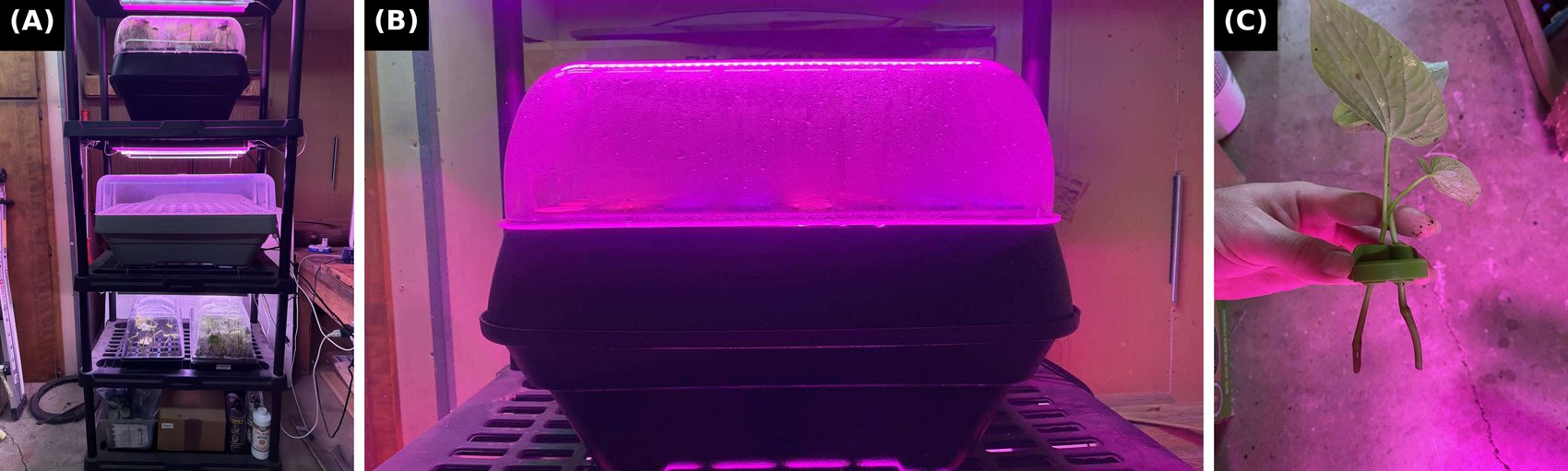
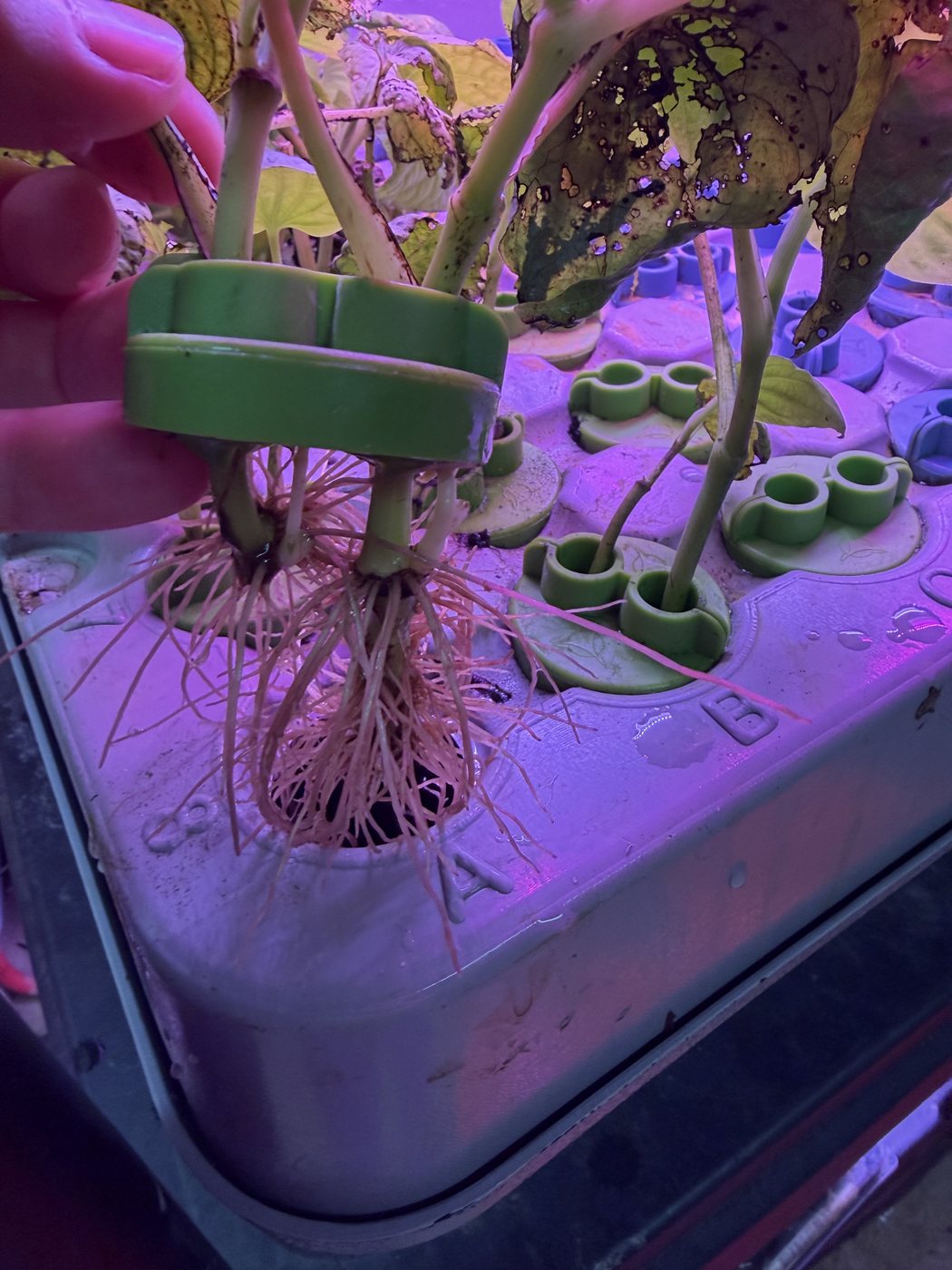
A TurboKlone T48 aeroponic unit (TurboKlone, Boise, ID, USA) with a 16 L reservoir was modified in two respects. First, each of the 48 collar sites was fitted with a double neoprene collar accommodating two cuttings, giving a 96-cutting capacity per run. Second, the stock spray manifold was supplemented with a single-head ultrasonic mister rated at 500 mL h−1, operated concurrently with a low-pressure sprinkler grid. The resulting combined fogger–sprinkler regime delivered continuous fine mist and direct spray to the root zone simultaneously. The integrated circulation fan was retained for reservoir oxygenation and thermal control. The system and the double-collar arrangement are shown in Figures 2 and 5.
Before each run, all wetted surfaces, collars and lines were swabbed with 70% ethanol, soaked in 10% v/v commercial sodium hypochlorite solution for 15 min, and rinsed three times in sterile reverse-osmosis water prior to charging the reservoir.
2.5. Nutrient Solution
Days 0–30: reverse-osmosis water amended with HydroGuard (Bacillus amyloliquefaciens, Botanicare, Vancouver, WA, USA) at 2 mL gal−1 (0.53 mL L−1) and Kind Grow (N–P–K 2–2–4, Botanicare) at 2 mL gal−1. Solution was adjusted to pH 5.8 and maintained at 200 ppm total dissolved solids (EC 400 µS cm−1).
Days 30–60: the reservoir was fully replaced at Day 30 and nutrient concentration raised to 350 ppm TDS (EC 700 µS cm−1) to support vegetative growth and axillary shoot development.
Reservoir pH, TDS and EC were verified daily with a calibrated combination meter and corrected as required.
2.6. Environmental Conditions
Greenhouse air temperature was maintained at 20–26 °C and reservoir temperature at 19 ± 1 °C by fan cooling. Combined fogger and sprinkler irrigation operated continuously through the rooting phase. Supplemental lighting was supplied by LED fixtures delivering 400 µmol m−2 s−1 photosynthetic photon flux density at canopy height (50:50 red:blue) on an 18 h light / 6 h dark photoperiod.
2.7. Root Conditioning Sequence
At Day 20, all rooted plants were transferred to a pulsed irrigation regime for 48 h. Cycles consisted of 3–5 min of combined fog and sprinkler application followed by 20–30 min of drying, producing repeated transient exposure of root apices to air. The endpoint was pre-specified as cessation of primary root elongation accompanied by browning confined to root apices, without necrosis extending into the root axis; plants were scored against this endpoint at the close of the 48 h period. Fog delivery in the root zone is shown in Figure 6.
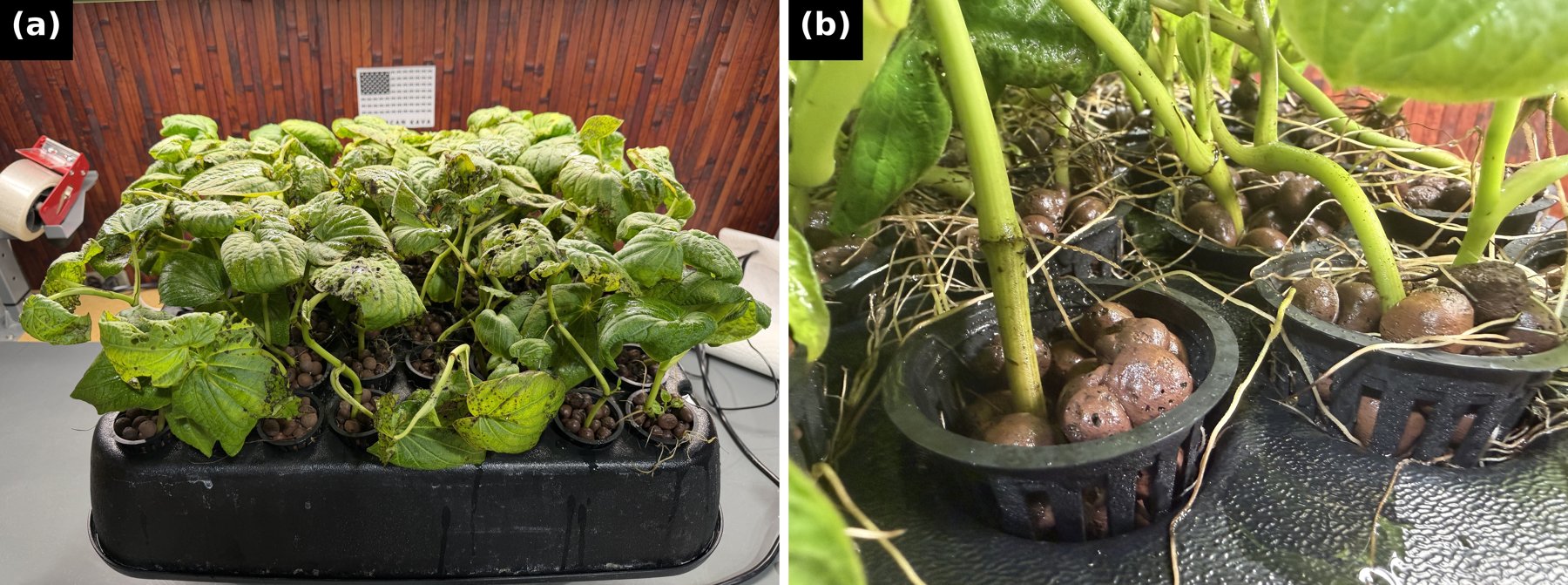
At Day 22, continuous combined irrigation was restored for 8 d to permit lateral branching. At Day 30, plants were transplanted into net pots containing lightweight expanded clay aggregate and maintained under the Days 30–60 nutrient regime for the balance of the cycle.
2.8. Outcome Definitions and Measurement
At Day 20, before the conditioning sequence, every cutting was removed, assessed and returned. Cuttings were assigned to one of four mutually exclusive, collectively exhaustive classes applied in the following order:
1. Rotted — complete basal tissue decay and necrosis.
2. Alive, no roots — turgid green stem, no visible root emergence.
3. Poorly rooted — at least one visible root, with aggregate root length below 2 cm.
4. Well-rooted — aggregate root length ≥2 cm, with ≥20 roots each ≥2 cm and visible branching.
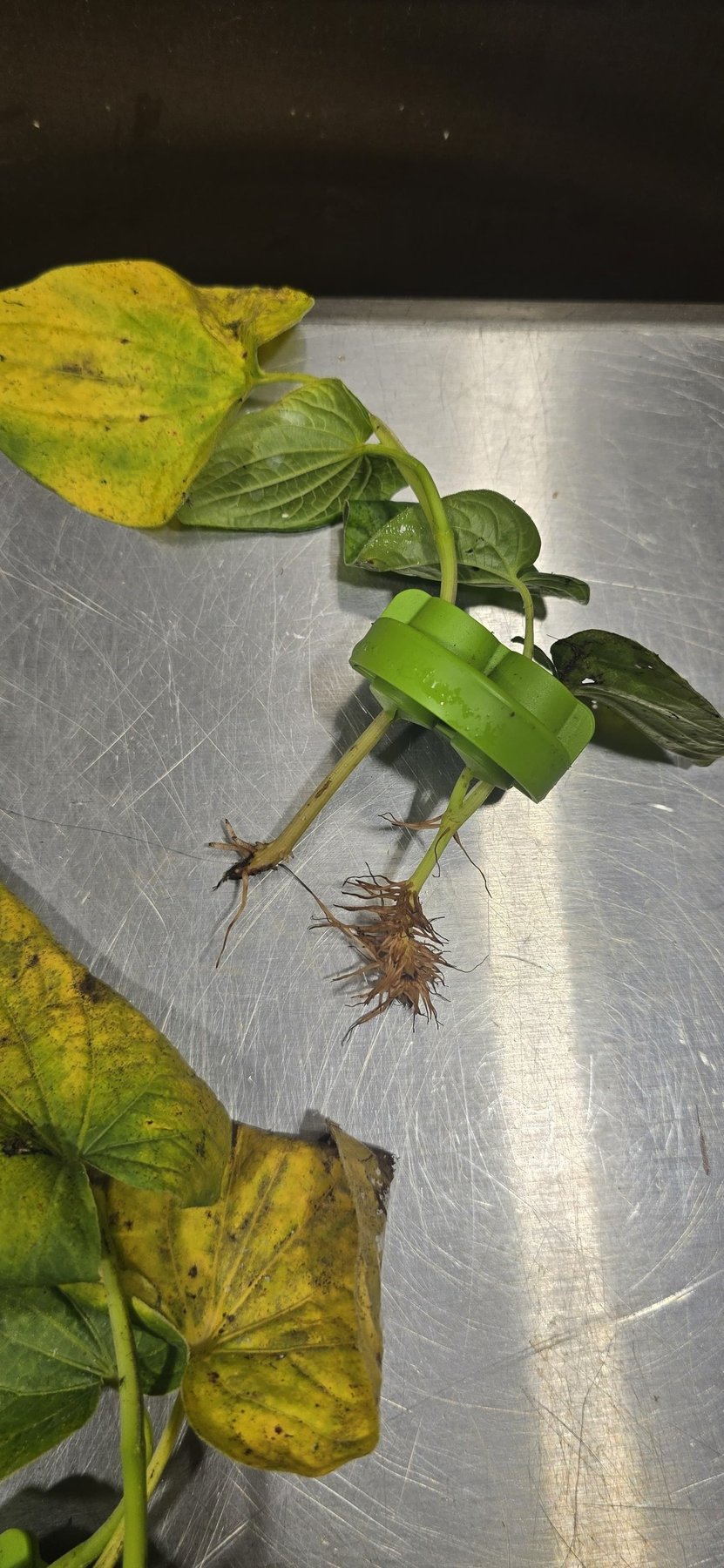
Any cutting with aggregate root length ≥2 cm that did not meet the well-rooted criteria would have been recorded as an intermediate class. No cutting in any run fell into that zone: observed root counts were 7–9 in poorly rooted plants and 20–75 in well-rooted plants, with no observation between 9 and 20 (Section 3.2). This bimodality is reported as an observation, not assumed by the scale. Representative cuttings at the well-rooted and poorly rooted boundary are shown in Figures 7 and 8.
The well-rooted threshold of ≥20 roots is substantially more stringent than the criterion used in our prior soft-stem work [8], where well-rooted denoted ≥3 roots each ≥2 cm with a branching root system, and than the equivalent criterion in the air-layering study [9], which applied the same scale. Percentages in the "well-rooted" category are therefore not directly comparable across these publications; total rooting frequency, defined identically in all three as any visible root development, is the appropriate cross-study comparator.
Primary root number per cutting was counted manually; a primary root was defined as an axis emerging directly from the stem or basal cut surface, excluding branches arising from an existing root axis. Root length was measured with digital calipers (±0.1 mm). Following the 8-d branching phase, newly formed lateral roots were counted and measured by the same conventions. Assessments were made non-destructively wherever possible so that plants could continue in the cycle. Counts were made by a single trained assessor; assessment was not blinded, and no independent re-count was performed (Section 4.2).
2.9. Second-Generation Harvest and Readiness Assessment
At Day 60 of each first-generation run, every propagule was assessed for capacity to supply second-generation micro-cuttings. Readiness required at least one non-senescing axillary shoot ≥3 cm in length with a stem diameter of 2.0–4.0 mm at full turgor. Plants failing this criterion were classed "not ready", withheld from harvest and retained for continued development. From ready plants, 1–2 micro-cuttings were excised under the Section 2.3 protocol. Where aggregate first-generation yield fell short of the 96-cutting target, the shortfall was made up from the original tissue-cultured mother plants, which by that point carried additional axillary shoot sites developed after their initial harvest. The number of cuttings drawn from each source was recorded.
2.10. Statistical Analysis
Rooting outcomes are reported as counts and percentages with 95% Wilson score confidence intervals. Root architecture variables are reported as mean ± standard deviation with observed range. Pooled means across runs are sample-size weighted; pooled standard deviations were computed from the full variance decomposition (within-group plus between-group components) rather than as within-group pooled estimates alone.
Homogeneity of rooting outcomes across the three runs within a generation was tested by the Fisher–Freeman–Halton exact test on the 3 × 2 run × (rooted / not rooted) table, computed by complete enumeration; the exact test was used in preference to a chi-square approximation because expected counts in the not-rooted cells fall below five. First- versus second-generation comparisons used Fisher's exact test on 2 × 2 tables, with the difference in proportions reported alongside its 95% confidence interval. Significance was set at α = 0.05, two-sided. Analyses were performed in Python 3.12 with SciPy 1.14 and statsmodels 0.14.
Two features of the design bound the interpretation of these tests and are stated here rather than only in the limitations. First, all 96 cuttings within a run shared a single reservoir, chamber and environmental control loop. The independent experimental unit for any inference about the system is therefore the run (n = 3 per generation), not the cutting (n = 288); tests computed on cuttings treat within-run observations as independent and will understate true uncertainty [22,23]. Analyses at the cutting level are reported for descriptive completeness and to characterize between-plant variation within runs, and should be read as such. Run-level results are given alongside them throughout. Second, no correction for multiple comparisons was applied; the small number of pre-specified comparisons and the descriptive intent of the analysis make the reported p-values supporting rather than confirmatory.
3. Results
3.1. First-Generation Rooting Outcomes
Rooting outcomes were closely similar across the three first-generation runs (Table 1). Run 1 (August 2025) produced 92 of 96 rooted cuttings (95.8%; 95% CI 89.8–98.4), of which 88 (91.7%) were well-rooted. Run 2 (December 2025) was identical at 92/96 rooted and 88 well-rooted. Run 3 (April 2026) produced 93/96 rooted (96.9%; 95% CI 91.2–98.9) with 90 (93.8%) well-rooted. Pooled across runs (288 cuttings), 277 rooted (96.2%; 95% CI 93.3–97.9) and 266 (92.4%; 95% CI 88.7–94.9) were well-rooted; 11 (3.8%) were poorly rooted, 6 (2.1%) remained alive without roots, and 5 (1.7%) rotted.
Rooting frequency did not differ detectably among runs (Fisher–Freeman–Halton exact p > 0.99). At the run level, mean rooting success was 96.2% with a range of 95.8–96.9%, a spread of 1.1 percentage points across an eight-month window spanning three seasons.
| Category | Run 1, Aug 2025 (n = 96) | Run 2, Dec 2025 (n = 96) | Run 3, Apr 2026 (n = 96) | Pooled (n = 288) | Pooled 95% CI |
|---|---|---|---|---|---|
| Rotted | 2 (2.1%) | 2 (2.1%) | 1 (1.0%) | 5 (1.7%) | 0.7–4.0 |
| Alive, no roots | 2 (2.1%) | 2 (2.1%) | 2 (2.1%) | 6 (2.1%) | 1.0–4.5 |
| Poorly rooted | 4 (4.2%) | 4 (4.2%) | 3 (3.1%) | 11 (3.8%) | 2.1–6.7 |
| Well-rooted | 88 (91.7%) | 88 (91.7%) | 90 (93.8%) | 266 (92.4%) | 88.7–94.9 |
| Total rooted | 92 (95.8%) | 92 (95.8%) | 93 (96.9%) | 277 (96.2%) | 93.3–97.9 |
3.2. Primary Root Development at Day 20
Primary root development before conditioning was consistent across runs (Table 2). Well-rooted plants averaged 46.2 ± 17.1 primary roots in Run 1 (range 21–73), 45.1 ± 16.8 in Run 2 (range 20–71) and 47.3 ± 17.9 in Run 3 (range 22–75), giving a pooled mean of 46.2 ± 17.2 roots per well-rooted plant (n = 266). Poorly rooted plants averaged 8.6 ± 0.7 roots (n = 11, range 7–9). Primary root lengths spanned 0.5–5.4 cm across all runs.
The distribution of primary root number was strongly bimodal. Across 277 rooted plants, no cutting produced between 10 and 19 primary roots: cuttings either produced fewer than ten short roots or more than twenty, with no intermediate response observed in any run. The dispersion within the well-rooted group was nonetheless substantial (SD 17.2, range 20–75), indicating that uniformity of classification did not extend to uniformity of root number.
| Group | n | Mean roots/plant | SD | Min | Max | Aggregate roots |
|---|---|---|---|---|---|---|
| Run 1 — August 2025 | ||||||
| Well-rooted | 88 | 46.2 | 17.1 | 21 | 73 | 4066 |
| Poorly rooted | 4 | 8.5 | 0.7 | 8 | 9 | 34 |
| All rooted | 92 | 44.6 | 18.4 | 8 | 73 | 4100 |
| Run 2 — December 2025 | ||||||
| Well-rooted | 88 | 45.1 | 16.8 | 20 | 71 | 3969 |
| Poorly rooted | 4 | 8.8 | 0.6 | 8 | 9 | 35 |
| All rooted | 92 | 43.5 | 18.0 | 8 | 71 | 4004 |
| Run 3 — April 2026 | ||||||
| Well-rooted | 90 | 47.3 | 17.9 | 22 | 75 | 4257 |
| Poorly rooted | 3 | 8.3 | 0.8 | 7 | 9 | 25 |
| All rooted | 93 | 46.0 | 18.9 | 7 | 75 | 4282 |
| Pooled — all runs | ||||||
| Well-rooted | 266 | 46.2 | 17.2 | 20 | 75 | 12,291 |
| Poorly rooted | 11 | 8.6 | 0.7 | 7 | 9 | 94 |
| All rooted | 277 | 44.7 | 18.4 | 7 | 75 | 12,386 |
3.3. Root Conditioning Outcomes
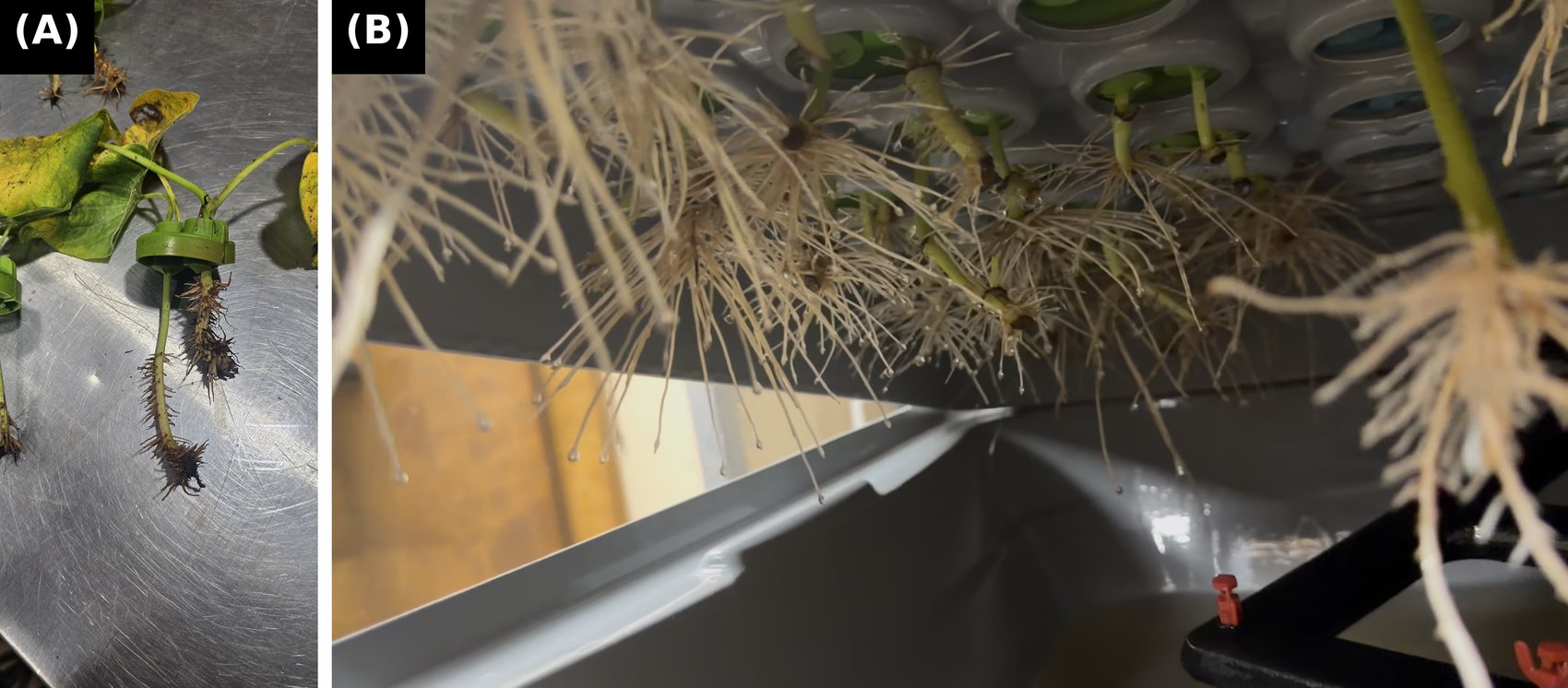
All 277 rooted plants (92, 92 and 93 in Runs 1–3) entered the 48-h pulsed fogger–sprinkler phase at Day 20. Every plant met the pre-specified conditioning endpoint — cessation of primary root elongation with browning confined to root apices and no necrosis extending into the root axis — in all three runs (277/277). All plants survived the subsequent 8-d continuous-irrigation phase, and all showed visible lateral branching initiation by Day 30 (277/277). Root architecture following conditioning is shown in Figure 9.
New lateral root production was consistent across runs (Table 3). Well-rooted plants produced 34.1 ± 10.9 new lateral roots in Run 1 (range 14–61), 33.4 ± 11.2 in Run 2 (range 13–59) and 35.2 ± 12.1 in Run 3 (range 15–63), pooling to 34.2 ± 11.4 laterals per well-rooted plant (n = 266). Poorly rooted plants produced 14.4 ± 2.8 laterals (n = 11). New laterals were markedly shorter than the pre-conditioning primary roots, with a pooled mean length of 1.84 ± 0.62 cm against a primary root range of 0.5–5.4 cm, consistent with a shift from axial extension to branching.
Because no plants were held back from conditioning, these outcomes describe root development under the protocol; they do not establish that the pulsed-irrigation phase caused the branching response, which cannot be separated here from ontogenetic progression over the same interval (Section 4.2).
| Group | n | Mean new laterals/plant | SD | Min | Max | Aggregate laterals |
|---|---|---|---|---|---|---|
| Run 1 — August 2025 (lateral length 0.6–3.2 cm; mean 1.84 ± 0.62 cm) | ||||||
| Well-rooted | 88 | 34.1 | 10.9 | 14 | 61 | 3001 |
| Poorly rooted | 4 | 14.5 | 3.1 | 11 | 18 | 58 |
| All rooted | 92 | 33.2 | 11.4 | 11 | 61 | 3059 |
| Run 2 — December 2025 (lateral length 0.6–3.0 cm; mean 1.79 ± 0.58 cm) | ||||||
| Well-rooted | 88 | 33.4 | 11.2 | 13 | 59 | 2939 |
| Poorly rooted | 4 | 13.8 | 2.9 | 10 | 17 | 55 |
| All rooted | 92 | 32.5 | 11.7 | 10 | 59 | 2994 |
| Run 3 — April 2026 (lateral length 0.7–3.3 cm; mean 1.88 ± 0.65 cm) | ||||||
| Well-rooted | 90 | 35.2 | 12.1 | 15 | 63 | 3168 |
| Poorly rooted | 3 | 15.1 | 3.3 | 11 | 19 | 45 |
| All rooted | 93 | 34.6 | 12.4 | 11 | 63 | 3213 |
| Pooled — all runs (lateral length 0.6–3.3 cm; mean 1.84 ± 0.62 cm) | ||||||
| Well-rooted | 266 | 34.2 | 11.4 | 13 | 63 | 9108 |
| Poorly rooted | 11 | 14.4 | 2.8 | 10 | 19 | 158 |
| All rooted | 277 | 33.5 | 11.8 | 10 | 63 | 9266 |
3.4. The 60-Day Cycle
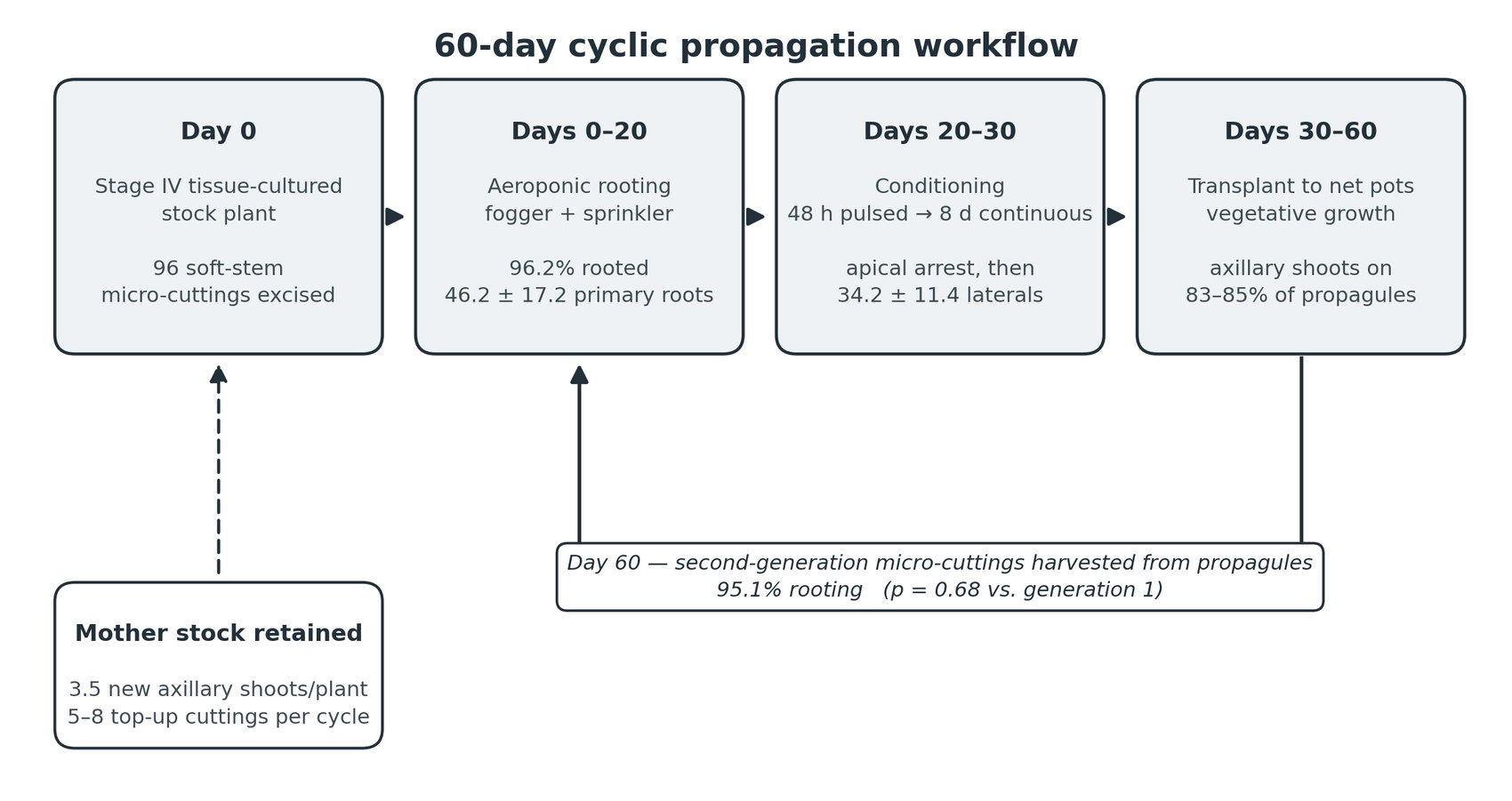
Following transplant to net pots at Day 30 and the increase in nutrient concentration, first-generation plants developed multiple new axillary shoots by Day 60. Over the same interval the original Stage IV tissue-cultured mother plants produced a mean of 3.5, 3.3 and 3.7 new axillary shoots per plant in Runs 1–3 respectively (pooled mean 3.5), regenerating harvestable shoot sites after their initial harvest. The full cycle structure is summarized in Table 4 and depicted schematically in Figure 1. Propagules at the point of second-generation harvest are shown in Figure 10, and regeneration of the original tissue-cultured mother stock across successive harvest rounds in Figure 11.
| Phase | Days | Duration | Principal activity | Nutrient level |
|---|---|---|---|---|
| Rooting | 0–20 | 20 d | Continuous combined fogger–sprinkler irrigation; adventitious root initiation and elongation | 200 ppm / EC 400 µS cm−1 |
| Conditioning (pulsed) | 20–22 | 48 h | Pulsed fog/spray with drying intervals; arrest of primary root elongation | 200 ppm / EC 400 µS cm−1 |
| Lateral branching | 22–30 | 8 d | Continuous combined irrigation restored; lateral root proliferation | 200 ppm / EC 400 µS cm−1 |
| Vegetative growth | 30–60 | 30 d | Transplant to net pots with LECA; axillary shoot development for the next harvest | 350 ppm / EC 700 µS cm−1 |
| Harvest | 60 | — | Non-destructive micro-cutting harvest from first-generation propagules and original mother plants | — |
3.5. Second-Generation Cutting Supply
At Day 60, a consistent minority of first-generation propagules had not yet developed a qualifying axillary shoot: 15 of 92 in Run 1 (16.3%), 14 of 92 in Run 2 (15.2%) and 16 of 93 in Run 3 (17.2%). Among ready plants, the majority yielded a single cutting and a minority yielded two, giving 89, 88 and 91 cuttings from first-generation propagules respectively. The shortfall against the 96-cutting target was supplied from the original tissue-cultured mother plants — 7, 8 and 5 cuttings respectively — and the target was met in all three runs (Table 5).
| Metric | Gen-2 Run 1, Oct 2025 | Gen-2 Run 2, Feb 2026 | Gen-2 Run 3, Jun 2026 |
|---|---|---|---|
| First-generation plants available | 92 | 92 | 93 |
| Not ready at Day 60 | 15 (16.3%) | 14 (15.2%) | 16 (17.2%) |
| Ready for harvest | 77 (83.7%) | 78 (84.8%) | 77 (82.8%) |
| Yielded 1 cutting | 65 | 68 | 63 |
| Yielded 2 cuttings | 12 | 10 | 14 |
| Cuttings from first-generation plants | 89 | 88 | 91 |
| Supplement from original TC mothers | 7 | 8 | 5 |
| Total prepared | 96 | 96 | 96 |
3.6. Second-Generation Rooting Outcomes
Second-generation runs rooted at 94.8% (91/96), 94.8% (91/96) and 95.8% (92/96), pooling to 274 of 288 (95.1%; 95% CI 92.0–97.1), with 260 (90.3%; 95% CI 86.3–93.2) well-rooted (Table 6). Outcomes were homogeneous across the three second-generation runs (Fisher–Freeman–Halton exact p > 0.99).
Relative to first-generation performance, total rooting fell by 1.0 percentage points (96.2% vs 95.1%; 95% CI for the difference −2.3 to 4.4; Fisher's exact p = 0.68) and well-rooted classification by 2.1 percentage points (92.4% vs 90.3%; 95% CI −2.5 to 6.7; Fisher's exact p = 0.46). Neither difference reached significance, and both confidence intervals include zero (Table 7). Rot incidence rose from 1.7% to 2.4% (5 vs 7 cuttings), a difference of two cuttings across 288 that provides no evidence of pathogen accumulation across the cycle but is far too small to exclude it.
| Category | Gen-2 Run 1, Oct 2025 (n = 96) | Gen-2 Run 2, Feb 2026 (n = 96) | Gen-2 Run 3, Jun 2026 (n = 96) | Pooled (n = 288) | Pooled 95% CI |
|---|---|---|---|---|---|
| Rotted | 2 (2.1%) | 3 (3.1%) | 2 (2.1%) | 7 (2.4%) | 1.2–4.9 |
| Alive, no roots | 3 (3.1%) | 2 (2.1%) | 2 (2.1%) | 7 (2.4%) | 1.2–4.9 |
| Poorly rooted | 5 (5.2%) | 4 (4.2%) | 5 (5.2%) | 14 (4.9%) | 2.9–8.0 |
| Well-rooted | 86 (89.6%) | 87 (90.6%) | 87 (90.6%) | 260 (90.3%) | 86.3–93.2 |
| Total rooted | 91 (94.8%) | 91 (94.8%) | 92 (95.8%) | 274 (95.1%) | 92.0–97.1 |
| Metric | Generation 1 | Generation 2 | Difference (pp) | 95% CI | Fisher's exact p |
|---|---|---|---|---|---|
| Total rooted | 96.2% (277/288) | 95.1% (274/288) | +1.0 | −2.3 to 4.4 | 0.68 |
| Well-rooted | 92.4% (266/288) | 90.3% (260/288) | +2.1 | −2.5 to 6.7 | 0.46 |
| Poorly rooted | 3.8% (11/288) | 4.9% (14/288) | −1.0 | −4.4 to 2.3 | 0.68 |
| Alive, no roots | 2.1% (6/288) | 2.4% (7/288) | −0.3 | −2.8 to 2.1 | >0.99 |
| Rotted | 1.7% (5/288) | 2.4% (7/288) | −0.7 | −3.1 to 1.7 | 0.77 |
4. Discussion
4.1. Principal Findings
Under the described protocol, soft-stem micro-cuttings excised from acclimatized Stage IV tissue-cultured Kali-Hiwa plantlets rooted at 96.2% within 20 days across three runs spanning three seasons, with 92.4% meeting a stringent well-rooted threshold and a mean of 46 primary roots per well-rooted plant. Run-to-run variation was 1.1 percentage points. Following the conditioning sequence, all rooted plants showed arrest of primary elongation and subsequent lateral branching, adding a mean of 34 short laterals per plant and yielding a compact, fibrous architecture. Second-generation cuttings taken from first-generation propagules performed indistinguishably from the first generation, closing the cycle.
Three aspects of this result merit emphasis. The first is the magnitude of the difference from existing options. Published nodal-cutting performance is 49–60% over 6–8 weeks [3]; our own prior soft-stem work returned 47% in peat cubes and 51% in a conventional aeroponic cloner [8], and air layering 75.8% over 21 days [9]. Rooting at 96.2% in 20 days is a substantial shift in both frequency and tempo, and the size of the gap makes it unlikely to be attributable to measurement or classification effects alone — though the absence of a concurrent control means it cannot be attributed to any specific element of the protocol either.
The second is the seasonal stability. Runs initiated in August, December and April differed by 1.1 percentage points in rooting frequency. This contrasts with the reported seasonal sensitivity of nodal propagation, where planting month shifted establishment by up to 19 percentage points [3]. It does not, however, distinguish the present system from our air-layering work: that study also found no significant difference across three seasonal windows (75.0%, 80.0% and 72.5%; p = 0.73) despite running in an open-air nursery under ambient South Florida conditions [9]. Seasonal insensitivity is therefore not by itself evidence that the controlled root zone is doing the work, and we claim only that the property a year-round production platform requires is present here.
The third is generational retention. A cyclic propagation platform is only viable if performance does not decay across cycles, and this is precisely where clonal systems commonly fail through pathogen accumulation, physiological ageing or cytokinin-driven abnormality [21]. Second-generation rooting at 95.1% against 96.2%, with the confidence interval for the difference spanning zero, provides direct evidence against decay over one generational transition. One transition is not many, and the point is made narrowly.
4.2. What This Design Can and Cannot Establish
The study is a single-arm protocol evaluation, and several constraints follow that we consider more consequential than the sample size.
No concurrent control. No cuttings were withheld from any element of the protocol. This bears most directly on the conditioning sequence. Every rooted plant progressed from primary elongation at Day 20 to lateral branching by Day 30, but lateral branching is also the expected ontogenetic course of an adventitious root system over that interval irrespective of treatment. Without a group held on continuous irrigation through Days 20–22, the branching response cannot be attributed to the pulsed phase, and the 100% figures for conditioning endpoint and branching describe the cohort's behavior rather than demonstrating an effect. The same applies to every other component — the double collar, the fogger–sprinkler combination, the specific nutrient schedule, the Bacillus inoculant, the IBA dip. The protocol was evaluated whole; its parts were not. A factorial or at minimum a pruned-versus-unpruned comparison is the necessary next experiment, and we regard the causal claim for air pruning as open until it is done.
Experimental unit. All 96 cuttings in a run shared one reservoir, one chamber and one control loop. Any contamination event, nutrient error or thermal excursion would act on the entire cohort. The independent unit for inference about the system is therefore the run, and there are three per generation, not 288 [22]; replication and experimental unit size are foundational to design in this sense [23]. We have reported cutting-level statistics because they characterize between-plant variability and because they are what a reader will want in order to compare with other cutting studies, but the confidence intervals attached to them are narrower than the design warrants, and the run-level figures given alongside are the honest basis for claims about the system. Replication across independent units — several units run concurrently, ideally in separate rooms — would resolve this and is inexpensive relative to its value.
Single cultivar. Only Kali-Hiwa was tested. Kava cultivars differ substantially in stem anatomy, lignification and internode length [1,2], and cytokinin response varies among genotypes [20]. Generalization beyond this cultivar is unsupported.
Unblinded, single-assessor measurement. Root counts and the conditioning endpoint were scored by one trained assessor who was aware of the study's expectations and was not blinded. For the conditioning endpoint in particular — a qualitative judgment of apical browning "without necrosis extending into the root axis" — this is a route by which expectation can enter the record, and a 100% success rate on a subjectively scored endpoint should be read with that in mind. Independent or blinded re-scoring, or photographic scoring by an assessor blind to phase, would strengthen this considerably.
The bimodal distribution. The absence of any cutting with 10–19 primary roots across 277 plants is striking, and we report it as observed. It may reflect a genuine threshold response in adventitious root initiation, or an artifact of counting: at high root numbers, manual counts of a dense fibrous mass are difficult, and an assessor working with a ≥20-root criterion in mind may resolve ambiguous cases toward the category boundary. Image-based quantification [24] would settle this and is recommended for any replication.
Short horizon. Outcomes end at Day 60 within each run. Ex vitro acclimatization success, field establishment, growth rate, disease resistance and eventual root yield — the outcomes that determine whether the platform delivers usable planting material — were not measured. Fibrous root architecture has been proposed as an indicator of transplant success in other micropropagated species [6], but that relationship is itself unvalidated in the source literature and is inferred rather than tested here.
Historical comparators. Comparisons with refs. [3,8,9] are across studies, cultivars, sites and assessors, not within a controlled experiment, and the well-rooted threshold differs from refs. [8,9] as noted in Section 2.8. Refs. [8,9] are the authors' own technical white papers, internally reviewed but not externally peer reviewed, which is a further reason to treat the contrast as indicative rather than evidential. Ref. [8] additionally used a different cultivar pairing (Kali-ISA and Kali-Hiwa) and larger-diameter soft-stem material (0.5–1.0 cm, against 2.0–4.0 mm here), so the contrast between 51% and 96.2% confounds source material, cutting calibre, system configuration and conditioning regime. These comparisons indicate the scale of the difference; they do not measure it.
4.3. Interpretation and Mechanism
Within these limits, the outcomes are consistent with established physiology. Aeroponic root zones sustain oxygen availability at the root surface while delivering nutrients continuously [12], conditions associated with improved adventitious rooting across species [10,11,15,16]. Soft-stem tissue at the first to second node carries high endogenous auxin and active cambial and pericycle tissue, the substrate on which applied IBA acts to initiate adventitious roots [25,26]; the very small stem diameters used here (2.0–4.0 mm) sit at the young end of that gradient. Cytokinin carryover from Stage II multiplication provides the axillary shoot proliferation that supplies cutting material in the first place [20,21], and it is this carryover, ordinarily treated as a nuisance in micropropagation, that the cyclic design turns into the throughput mechanism.
The historical prohibition on soft kava stem material [27] was formulated for soil-based nurseries with high microbial load and limited aeration, where such tissue does rot readily. Our earlier work suggested that the constraint is environmental rather than intrinsic to the tissue [8]; the present results are consistent with that reading, in that soft-stem material under sterile, well-aerated, continuously irrigated conditions rotted in 5 of 288 cuttings.
For air pruning specifically, the mechanism proposed in the container nursery literature is that transient apical desiccation arrests elongation and releases lateral primordia from apical control [17]. The root systems we observed at Day 30 — short, numerous laterals replacing continued axial extension — have the morphology that mechanism predicts. We note that the container literature is itself mixed on the magnitude of the benefit [18,19], that those studies concern containerized substrate rather than an aeroponic root zone, and that our own design cannot distinguish the mechanism from ontogeny in any case (Section 4.2).
4.4. Practical Considerations
The system is built from commercially available equipment. A single modified T48 unit occupies under 0.5 m² and, at 96 cuttings per 60-day cycle with the observed rooting frequency, yields approximately 92 rooted plants per cycle from one footprint, with the cohort itself supplying the next cycle's cuttings. Against tissue culture, the capital and skill requirements are far lower and the acclimatization step is absorbed into the propagation cycle rather than standing as a separate loss point. Against nodal cuttings, no mature plant is destroyed.
The counterweights are real. The system requires uninterrupted power, a maintained reservoir and daily monitoring; a pump or fogger failure at Day 10 would likely cost the entire cohort, which is a direct consequence of the shared-reservoir design noted above. It requires a tissue culture source or an equivalent supply of hardened, cytokinin-primed stock plants, which is not a trivial precondition for a Pacific Island nursery. And the 15–17% of propagules not ready at Day 60 means a standing mother-plant reserve is needed to hold throughput constant — in our runs, 5–8 cuttings per cycle. A grower planning capacity should size that buffer explicitly rather than assume full yield from the previous cohort.
4.5. Future Work
The priority is a controlled comparison. A factorial trial separating the pulsed conditioning phase from continuous irrigation, run across multiple independent units, would establish whether air pruning contributes what we have assumed it does and would place the inference on a sound experimental unit. Beyond that: replication across cultivars spanning the morphological range of P. methysticum; extension to multiple generations to test for decay beyond one transition; blinded or image-based root quantification [24]; measurement of field establishment and root yield from propagules produced this way; and an economic comparison against nodal cuttings, peat-cube soft-stem propagation, air layering and conventional tissue culture, which is what a grower deciding between methods actually needs.
5. Conclusions
A hybrid protocol combining soft-stem micro-cuttings from acclimatized Stage IV tissue-cultured P. methysticum (Kali-Hiwa) with a modified aeroponic mist chamber and a defined root-conditioning sequence produced 96.2% rooting within 20 days across three seasonally separated runs, with 92.4% of cuttings meeting a stringent well-rooted threshold and run-to-run variation of 1.1 percentage points. Conditioned plants developed compact fibrous root systems averaging 34 new laterals. Second-generation cuttings harvested from first-generation propagules rooted at 95.1%, statistically indistinguishable from the first generation, supporting a repeating 60-day cycle that decouples propagule supply from harvest.
These results establish that the protocol is feasible, repeatable across seasons and stable across one generational transition. They do not establish the causal contribution of any individual component, including air pruning, and they do not extend beyond a single cultivar or beyond Day 60. Controlled, independently replicated comparisons and field validation are the required next steps, and until they are done the appropriate reading of this work is as a protocol report with promising and reproducible outcomes rather than as a demonstration of mechanism.
Figures

Supplementary Materials
The following supporting information is available from the corresponding author on reasonable request: Table S1: per-cutting outcome and root count records for all six propagation runs; Table S2: daily reservoir pH, TDS, EC and temperature logs; Figure S1: photographic record of the conditioning endpoint assessment.
Author Contributions
Conceptualization, T.B.; methodology, T.B.; validation, T.B., J.B. and M.M.; formal analysis, T.B.; investigation, T.B.; resources, T.B.; data curation, T.B.; writing—original draft preparation, T.B.; writing—review and editing, T.B., J.B. and M.M.; visualization, T.B.; supervision, T.B.; project administration, T.B. All authors have read and agreed to the published version of the manuscript.
Funding
This research received no external funding.
Data Availability Statement
The two antecedent studies in this series are openly available as American Kava Association technical white papers at the URLs given in refs. [8,9]. The per-cutting datasets generated and analyzed during this study, together with the environmental logs, are available from the corresponding author on reasonable request.
Acknowledgments
The authors thank the staff of the Kali Kava Research Facility, Sacramento, CA, for maintaining tissue-cultured plant material and supporting the acclimatization program across all trial windows.
Use of Generative Artificial Intelligence
Generative artificial intelligence was used in the preparation of this manuscript. Claude Opus 4.6 (Anthropic) was used to compile study data into tabular form, to construct the manuscript tables, and to perform arithmetic checks of the reported calculations. All compiled values and derived calculations were independently verified by the authors against the source records. ChatGPT 5.2 (OpenAI) was used for grammar and language editing only. No data were generated, imputed, or interpreted by generative artificial intelligence.
Conflicts of Interest
The authors declare the following interests, and readers should weigh the findings in light of them. All three authors are commercially engaged in the kava trade and own or operate kava nurseries and kava businesses in California and Florida that are commercially involved in kava cultivation and propagation, including the cultivar and methods evaluated here. T.B. is a co-founder of Kali Kava, which supplied the plant material used in this study and offers the Kali-Hiwa cultivar commercially, and holds an ownership interest in Root of Happiness, which has commercial interests in kava production and sale; J.B. is affiliated with Nakava LLC and M.M. with Kavafied. T.B. and J.B. are affiliated with the American Kava Association, which publishes this journal. The authors therefore stand to benefit commercially from favorable findings regarding the propagation of American kava cultivars. The TurboKlone T48 units used in this study were purchased at commercial retail price; no compensation, discount or equipment loan was received from the manufacturer or from the suppliers of any other named product. The study was designed, conducted, analyzed and reported independently, and no external commercial funding influenced the experimental design, data collection, data interpretation or publication of the results.
Editorial process
Tyler Blythe is the founder of the American Kava Association, which publishes this journal, and is the journal's Editor-in-Chief; he handled this manuscript. Before acceptance the manuscript underwent Computational Manuscript Review (CMR; see editorial policies) and was then accepted on the editor's decision. No editorial review independent of the authors took place. Corrections, if any, are issued as dated notices linked from this page; the version of record is not amended silently.
References
- Lebot, V. The Origin and Distribution of Kava. Canberra Anthropol. 1995, 18, 20–33. https://doi.org/10.1080/03149099509508407
- Lebot, V.; McKenna, D.J.; Johnston, E.; Zheng, Q.Y.; McKern, D. Morphological, Phytochemical, and Genetic Variation in Hawaiian Cultivars of 'Awa (Kava, Piper methysticum, Piperaceae). Econ. Bot. 1999, 53, 407–418. https://doi.org/10.1007/BF02866720
- Davis, R.I.; Brown, J.F. Kava (Piper methysticum) in the South Pacific: Its Importance, Methods of Cultivation, Cultivars, Diseases and Pests; ACIAR Technical Reports Series No. 46; Australian Centre for International Agricultural Research: Canberra, ACT, Australia, 1999; ISBN 1-86320-257-9.
- Prasad, R.; Tyagi, A.P.; Taylor, M. Regeneration and Establishment of Whole Plants from Kava (Piper methysticum Forster) Meristems in Tissue Culture. South Pac. J. Nat. Appl. Sci. 2008, 26, 39–44. https://doi.org/10.1071/SP08006
- Zhang, Z.; Zhao, L.; Chen, X.; Zheng, X. Successful Micropropagation Protocol of Piper methysticum. Biol. Plant. 2008, 52, 110–112. https://doi.org/10.1007/s10535-008-0020-9
- Dushimimana, C.; Magomere, T.; Mulatya, J.; Vandenabeele, J.; Olubayo, F.; Smagghe, G.; Werbrouck, S.P.O. Variation of Morphological Traits and Quality Indices of Micropropagated Melia volkensii Gürke Clones before Field Planting. Forests 2022, 13, 337. https://doi.org/10.3390/f13020337
- Mohammed, M.; Munir, M.; Ghazzawy, H.S. Design and Evaluation of a Smart Ex Vitro Acclimatization System for Tissue Culture Plantlets. Agronomy 2023, 13, 78. https://doi.org/10.3390/agronomy13010078
- Blythe, T.; Bowman, J.; Masifilo, M. Soft-Stem Propagation of Piper methysticum Using Peat-Based Media and Aeroponic Cloning Systems; American Kava Association Technical White Paper No. 1, Version 1.0; American Kava Association: Las Vegas, NV, USA, February 2026. Available online: https://www.americankavaassociation.org/study/aeroponic-cloning-peat (accessed on 6 September 2026).
- Blythe, T.; Bowman, J.; McDonnell, B. Outdoor Nursery Propagation of Kava (Piper methysticum) by Air Layering; American Kava Association Technical White Paper No. 4, Version 1.0; American Kava Association: Las Vegas, NV, USA, September 2026. Available online: https://www.americankavaassociation.org/study/air-layering-florida (accessed on 6 September 2026).
- Scaltrito, E.; Cristiano, G.; Sdao, A.E.; Gruda, N.S.; Loconsole, D.; De Lucia, B. Influence of Water Spraying Intervals and Indole-3-Butyric Acid Concentrations on Salvia Rooted Cuttings Quality in a Closed Aeroponics System. Sci. Hortic. 2024, 337, 113452. https://doi.org/10.1016/j.scienta.2024.113452
- Lykokanellos, G.; Lagogiannis, I.; Liopa-Tsakalidi, A.; Salachas, G. Effects of Growth Regulators and Propagation Systems on the Growth of Lavender (Lavandula angustifolia) Cuttings. Horticulturae 2026, 12, 246. https://doi.org/10.3390/horticulturae12020246
- Naseem, M.T.; Zaman, W. Root-Zone Engineering in Closed Soilless Horticulture: From Plant Physiology to Sensor-Guided Control. Horticulturae 2026, 12, 1088. https://doi.org/10.3390/horticulturae12091088
- Buckseth, T.; Singh, R.K.; Tiwari, J.K.; Sharma, A.K.; Singh, S.; Chakrabarti, S.K. A Novel Sustainable Aeroponic System for Healthy Seed Potato Production in India—An Update. Indian J. Agric. Sci. 2020, 90, 243–248. https://doi.org/10.56093/ijas.v90i2.98995
- Tunio, M.H.; Gao, J.; Shaikh, S.A.; Lakhiar, I.A.; Qureshi, W.A.; Solangi, K.A.; Chandio, F.A. Potato Production in Aeroponics: An Emerging Food Growing System in Sustainable Agriculture for Food Security. Chil. J. Agric. Res. 2020, 80, 118–132. https://doi.org/10.4067/S0718-58392020000100118
- Zhang, M.; Montanez, C.; Pearson, B.J.; Li, Y.; Chen, J. Aeroponics Enables Consistent Cutting Propagation of Kratom (Mitragyna speciosa): Impacts of Photoperiod, Cultivar, and Rooting Hormone. Front. Plant Sci. 2025, 16, 1650327. https://doi.org/10.3389/fpls.2025.1650327
- Weingarten, M.; Mattson, N.; Grab, H. Evaluating Propagation Techniques for Cannabis sativa L. Cultivation: A Comparative Analysis of Soilless Methods and Aeroponic Parameters. Plants 2024, 13, 1256. https://doi.org/10.3390/plants13091256
- Elsysy, M.; Einhorn, T.C. Air-Pruning Containers Modify Root and Scion Growth and Alter Resource Allocation of Bench-Grafted Apple Plants. Horticulturae 2022, 8, 797. https://doi.org/10.3390/horticulturae8090797
- Gilman, E.F.; Paz, M.; Harchick, C. Effect of Eight Container Types and Root Pruning During Nursery Production on Root Architecture of Acer rubrum. Arboric. Urban For. 2016, 42, 31–45. https://doi.org/10.48044/jauf.2016.003
- Pokhrel, A.; Albrecht, U. Evaluation of Different Container Types on Root Structure and Performance of Nursery-Grown Citrus Plants. HortScience 2024, 59, 1056–1064. https://doi.org/10.21273/HORTSCI17979-24
- Seliem, M.K.; Abdalla, N.; El-Mahrouk, M.E. Cytokinin Potentials on In Vitro Shoot Proliferation and Subsequent Rooting of Agave sisalana Perr. Syn Horticulturae 2025, 11, 929. https://doi.org/10.3390/horticulturae11080929
- Dewir, Y.H.; Nurmansyah; Naidoo, Y.; Teixeira da Silva, J.A. Thidiazuron-Induced Abnormalities in Plant Tissue Cultures. Plant Cell Rep. 2018, 37, 1451–1470. https://doi.org/10.1007/s00299-018-2326-1
- Rogers, A.; Dietz, K.-J.; Gifford, M.L.; Lunn, J.E. The Importance of Independent Replication of Treatments in Plant Science. J. Exp. Bot. 2021, 72, 5270–5274. https://doi.org/10.1093/jxb/erab268
- Casler, M.D. Fundamentals of Experimental Design: Guidelines for Designing Successful Experiments. Agron. J. 2015, 107, 692–705. https://doi.org/10.2134/agronj2013.0114
- Seethepalli, A.; Dhakal, K.; Griffiths, M.; Guo, H.; Freschet, G.T.; York, L.M. RhizoVision Explorer: Open-Source Software for Root Image Analysis and Measurement Standardization. AoB PLANTS 2021, 13, plab056. https://doi.org/10.1093/aobpla/plab056
- Druege, U.; Hilo, A.; Pérez-Pérez, J.M.; Klopotek, Y.; Acosta, M.; Shahinnia, F.; Zerche, S.; Franken, P.; Hajirezaei, M.R. Molecular and Physiological Control of Adventitious Rooting in Cuttings: Phytohormone Action Meets Resource Allocation. Ann. Bot. 2019, 123, 929–949. https://doi.org/10.1093/aob/mcy234
- Liu, P.; Zhang, S.; Wang, X.; Du, Y.; He, Q.; Zhang, Y.; Shen, L.; Hu, H.; Zhang, G.; Li, X. Adventitious Root Formation in Cuttings: Insights from Arabidopsis and Prospects for Woody Plants. Biomolecules 2025, 15, 1089. https://doi.org/10.3390/biom15081089
- Secretariat of the Pacific Community. Pacific Kava: A Producer's Guide; Secretariat of the Pacific Community: Suva, Fiji Islands, 2001; ISBN 982-203-810-0.
How to cite
Blythe, T.; Bowman, J.; Masifilo, M. Hybrid Aeroponic Propagation of Tissue Culture-Derived Soft-Stem Micro-Cuttings of Piper methysticum. J. Am. Kava 2026, 2, 008. https://journalofamericankava.org/articles/aeroponic-micro-cuttings
Please cite this version of record. The earlier preprint (10.5281/zenodo.22839796) is superseded by it.